


The Greatest Comic Book Debuts of Impossible Comic Book Dimensions and Realms
Comic book dimensions, zones, and realms are the narrative playgrounds for comic book creators. Latveria, Kahndaq, Wakanda, Krypton, and Themyscira are tangible places in the minds and imaginations of hardcore and casual comic book fans. Consider how many people know about the MCU’s Quantum Realm and its connection to Ant-Man but have probably never read a comic.
The Fifth Dimension is a dimension made of imagination; it also houses reality-warping imps. The Microverse is a miniature dimension as spacious as a full universe. On Krypton, authorities would punish criminals by sending them to the Phantom Zone, a place where they never age or die, only perpetually exist as if frozen in time.
These imaginary dimensions and realms act as main characters, too, when it comes to worldbuilding.
Here are seven of the most incredible and impossible comic book dimensions.
1. Official Handbook of the Marvel Universe #3 (1983) Marvel
Scott Summers, also known as Cyclops, is a comic book and animation fan-favorite. After surviving a traumatic head injury as a child, Summers’ mutant powers begin manifesting.
Casual readers and those who know nothing about X-Men comics may think Cyclops shoots laser beams from his eyes. He doesn’t. Cyclops shoots beams of pure and explosive concussive force from his eyes. Imagine getting caught in the blast wave of a bomb detonation; Cyclops shoots focused, concussive blast wave energy from his eyes every time he opens them.
In this comic, an encyclopedia of Marvel’s characters from C to D, it states that Cyclops’ eyes and brain are a conduit for another dimension. When Cyclops opens his eyes, pure concussive energy from this dimension flows through his eyes. Fans call it, the “Punch Dimension,” but this explanation is not canon in the comics.
A near-perfect copy of this comic is worth $100.
2. Fantastic Four #51 (1966) Marvel
One of the most infamous comic book dimensions at Marvel is the Negative Zone. It is an unstable and dangerous dimension made of pure antimatter. Reed Richards visits the Negative Zone for the first time in this issue. In the 1960s and 1970s, the Negative Zone was a narrative device for the dangers of exploration that explorers like the Fantastic Four face.
A 9.8 CGC grade of this comic is worth almost $4,200.
3. Adventure Comics #283 (1961) DC
Comic book dimensions, zones, and realms are not a new thing. Comic book creators would create such new worlds to expand their storytelling scope. The Phantom Zone made its debut in this issue. Superboy comes across a receptacle containing Kryptonian weapons and devices that land on Earth.
One of the devices opens a portal to the Phantom Zone. The Phantom Zone is a parallel dimension where Kryptonians send their criminals. They don’t die or age; these criminals just exist in a state of eternal suspended animation.
This comic is worth about $24,200 on the collectibles market in near-perfect condition.
4. Captain America Comics #26 (1943) Marvel
Comic book fans and experts often argue about the true first appearance of the “Microverse” in Marvel Comics. In this comic, the Microverse makes its debut. Captain America and Bucky enter the microverse for an adventure. Many fans think the Microverse made its debut in Fantastic Four #16 in 1963, but the concept made its true debut here.
Comic book dimensions like the MCU’s Quantum Realm were inspired by the Microverse.
A 9.2 CGC grade of this comic $ is worth over $11,500.
5. Journey Into Mystery #85 (1962) Marvel
Asgard comprises one of nine comic book dimensions, or realms, in Marvel Comics. The Nine Realms spread out from Yggdrasil, the celestial world tree, or cosmic tree, at the center of the universe. The Asgardians and their allies and enemies inhabit these nine realms. Thor, Mjolnir, and Loki made their debuts in Journey Into Mystery #83. Asgard made its first appearance in this issue.
A copy of this comic with a 9.2 CGC grade is worth almost $21,700. If you find a copy of this comic with a 9.8 CGC grade, never let it go. A 9.8 CGC grade of this comic is worth almost $136,700.
6. Superman #30 (1944) DC
Comic book dimensions, like the Fifth Dimension, act more as a narrative plot for a character than a dimension. The Fifth Dimension is a realm of pure imagination energy and features dimensional “imps.” Mister Mxyzptik and the Fifth Dimension make their first appearance in this issue. Myxyzptik is a reality warping being who can only be defeated by tricking him into saying his name backwards.
A 9.8 CGC grade of this comic is worth over $17,000 on the collectibles market.
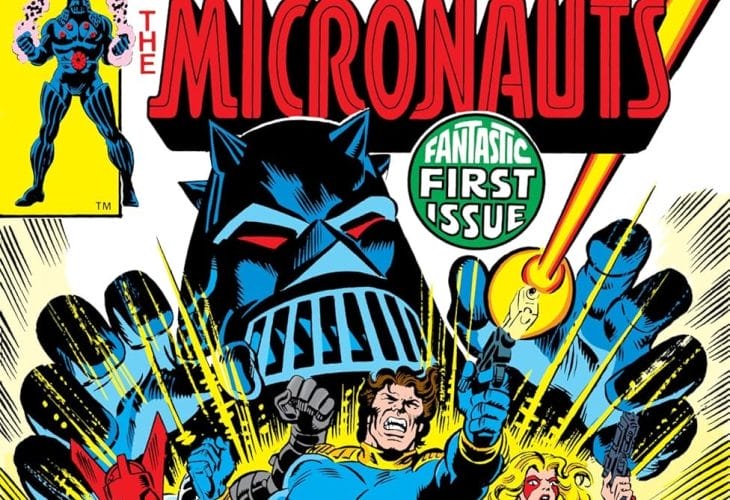
7. Micronauts #1 (1979) Marvel
The Micronauts were a popular 1970s toy line of miniature toys. They were heroes fighting for justice in a dystopian micro-universe. Marvel Comics would license the toys to appear in their comics from 1979 until 1984 in the original run. Even though the term “Microverse” made its debut in Captain America Comics #26 in 1943, it was lost through litigation.
Hasbro, which owns the Micronauts IP, got the legal rights to the term “Microverse” after the comic book licensing deal was over. So, that is why the MCU had to use the term “Quantum Realm,” instead of “Microverse,” in their films.
A 9.8 CGC grade of this comic is worth almost $118.
This post includes affiliate links. If you purchase anything through these affiliated links, the author/website may earn a commission.
You May Also Like…
- These 8 Comic Debuts Changed Everything: The Authority Figures Behind Your Favorite Heroes
- 5 Daredevil Villains Every Marvel Fan Must Know — And 5 So Bad You Won’t Believe They Exist
- Think Powers Matter? These 8 Comics Prove Superheroes with No Powers Are Hot Investments
- If You Bought Comics in the 90s, You Need to Check These ASAP
- The Most Valuable Key Comics Aren’t Always About the Hero – These Supporting Characters Prove It

Allen Francis is the lead staff writer for PFAdvice.com at District Media, Inc., specializing in comic book investing, collectibles, popular culture, and practical wealth-building strategies. A New York City native, Marymount Manhattan College graduate, and former college academic advisor, librarian, and adjunct instructor, he brings 15+ years of professional writing experience and a proven personal transformation from financial illiteracy to expert collector. He also the author of The Casual’s Guide: Why You Should Get Into Comic Book Investing.